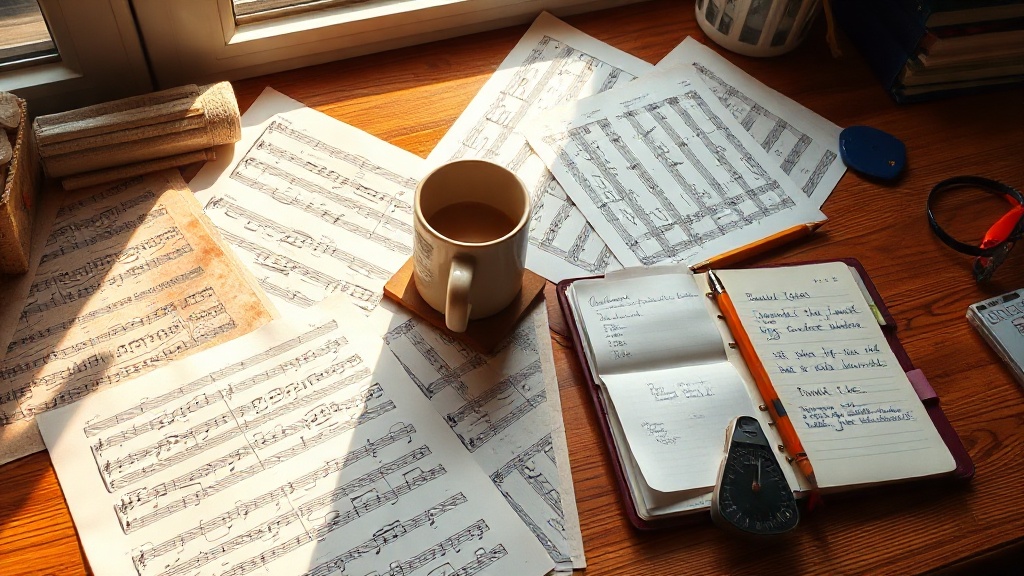
How Independent Music Teachers Reclaim Their Practice Time
Every independent music teacher I know has hit the same wall.
You didn’t open a studio so you could spend Tuesday afternoon texting five parents about schedule swaps, sending the same invoice for the third time, and trying to remember whether the Johnsons prepaid for May. You opened it to make music. To teach. To play.
But somewhere between lesson one and lesson two hundred, something shifted. The studio started running you. And the last time you played your own instrument — really played, not scales-as-warmup, not the demo you played for a student — was last week. Last month. You don’t even want to say.
If that’s you, this is for you.
The Three Things Eating Your Practice Time
It’s not the teaching. Teaching is what you signed up for, and you love it.
It’s the stuff that piles up around teaching. Specifically, these three:
Parent texts. Mom wants to know if next Tuesday works. Dad needs to cancel because of a school play. Grandma is asking whether you’re the right teacher for her grandson, who already plays, but actually doesn’t. Every text is a small interruption. They add up. By the end of the day your phone has 27 unread messages from families, and you’ve spent two hours typing replies that didn’t require a human — they just required a human to send.
Scheduling back-and-forth. “Can we move to 4pm?” “Actually 4:30?” “Tuesday is hard, can we do Wednesday?” “Wednesday at 3?” “Wait — does that conflict with soccer?” You’re the air traffic controller for 25 students’ lives. Every reschedule is a thread. Every thread eats 15 minutes. Some weeks you spend more time rescheduling lessons than teaching them.
Payment chasing. You sent the invoice. You sent it again. You sent a polite reminder. Then a slightly less polite reminder. Then you just… didn’t send it, because the awkward is worse than the money. The teacher I knew best had $3,400 in unpaid invoices she never chased because she hated the conversations. The cost in practice time she lost chasing them was bigger than the $3,400.
Read that last line again.
The Cost Isn’t Just Burnout. It’s Skill Drift.
Burnout gets talked about, so let’s not belabor it. You know what burnout feels like.
The thing nobody talks about is the other thing.
When you stop practicing — really practicing, with intention, for yourself — your playing drifts. Your ear gets duller. Your phrasing gets staler. Your technique gets rustier. You can still teach. But you’re teaching from memory, not from nerves.
And your students can tell.
You might not, at first. They’re young. They’re forgiving. They’re learning fundamentals. They don’t know that the way you demonstrate a phrase is the way you demoed it five years ago, because you haven’t been practicing it since.
But you know. You feel it when you finally sit down at your own instrument after a long day. Your playing sounds like a teacher demoing something. Not like a musician working through something.
That drift is quiet. And it’s the thing that makes you want to quit someday — even though you still love teaching.
The Shift: Admin Is Coachable. Practice Is Human-Only.
Here’s the frame that changed how I think about running a studio.
Studio work splits into two categories: the repeatable stuff and the human stuff.
The repeatable stuff has rules and patterns. Scheduling, billing, reminders, parent messaging, invoice generation. A message goes out. A charge happens. A reminder fires. The work is defined by the recipe.
The human stuff is you at the piano, in the practice room, listening, adjusting, demonstrating, growing. It cannot be automated because it’s the thing that makes you better at the thing you’re already great at.
The problem is that most independent music teachers, when things get busy, let the human stuff slip first — because they think it’s negotiable. It isn’t. Every week you don’t practice is a week your students get a slightly worse version of you.
Let Your Studio Assistant Handle the Repeatable Stuff
This is the whole point of a tool built for music teachers. Not a generic calendar. Not an invoicing app with a music template bolted on. A studio assistant that speaks the language of lessons, recitals, parent messages, and monthly tuition.
It does the three things eating your practice time — but on autopilot. Parents get instant responses to scheduling requests. Invoices go out and get chased automatically. You see, at a glance, who paid and who didn’t, without a single awkward text.
You handle the practice room.
That’s the deal. That’s the actual job.
Try It. Then Play.
Fermata runs the admin layer for your studio — scheduling, parent messaging, billing, reminders. So you keep your practice time.
The 14-day free trial takes about 20 minutes to set up. The Basic plan is $9 a month and covers everything most solo teachers need. If you want the Find Students marketplace on top, Pro is $18 a month.
Either way, the math is the same: stop trading practice time for payment chasing.
You became a music teacher to make music. Let your studio assistant do the rest.
Run your studio on Fermata
Scheduling, parent messaging, billing, and reminders — built for music teachers, so you keep your practice time.
Try Fermata free for 14 daysThe Basic plan is $9 a month — Pro with the Find Students marketplace is $18 a month. No credit card required.